
Review books by our faculty
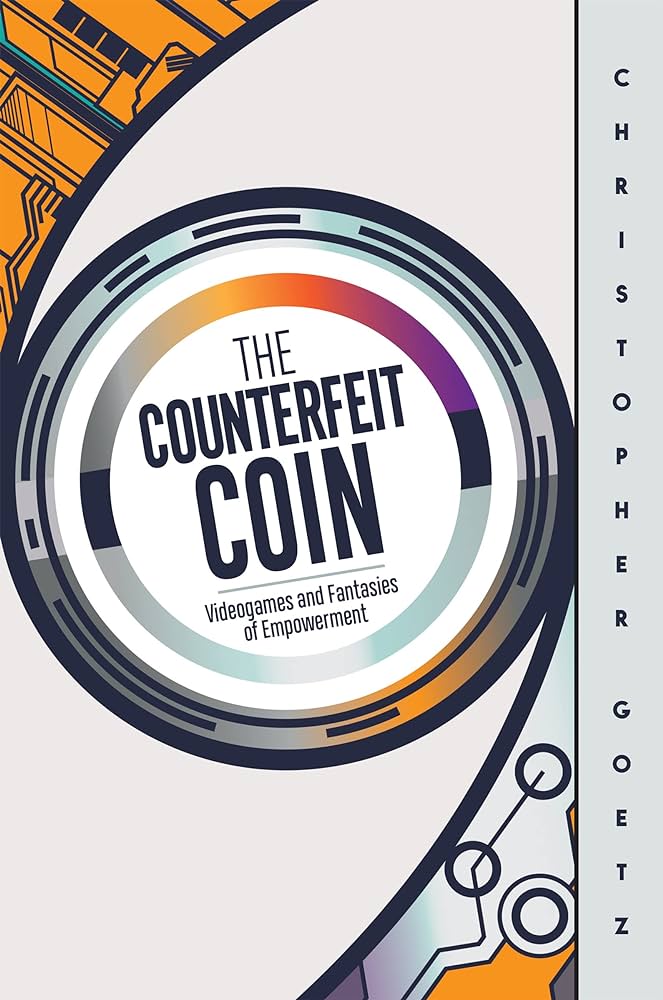
The Counterfeit Coin: Video Games and Fantasies of Empowerment (2023)
Chris Goetz
The Counterfeit Coin argues that games and related entertainment media have become almost inseparable from fantasy. In turn, these media are making fantasy itself visible in new ways. Though apparently asocial and egocentric—an internal mental image expressing the fulfillment of some wish—fantasy has become a key term in social contestations of the emerging medium. At issue is whose fantasies are catered to, who feels powerful and gets their way, and who is left out. This book seeks to undo the monolith of commercial gaming by locating multiplicity and difference within fantasy itself. It introduces and tracks three broad fantasy traditions that dynamically connect apparently distinct strata of a game (story and play), that join games to other media, and that encircle players in pleasurable loops as they follow these connections.
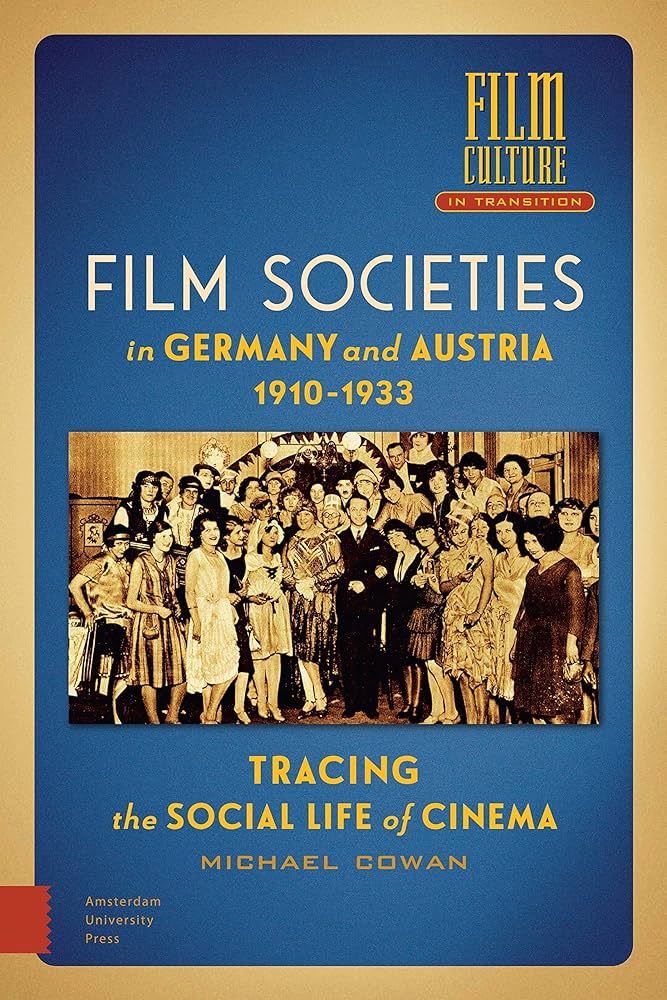
Film Societies in Germany and Austria 1910-1933: Tracing the Social Life of Cinema (2023)
Michael Cowan
This study traces the evolution of early film societies in Germany and Austria, from the emergence of mass movie theaters in the 1910s to the turbulent years of the late Weimar Republic. Examining a diverse array of groups, it approaches film societies as formations designed to assimilate and influence a new medium: a project emerging from the world of amateur science before taking new directions into industry, art and politics. Through an interdisciplinary approach—in dialogue with social history, print history and media archaeology—it also transforms our theoretical understanding of what a film society was and how it operated. Far from representing a mere collection of pre-formed cinephiles, film societies were, according to the book’s central argument, productive social formations, which taught people how to nurture their passion for the movies, how to engage with cinema, and how to interact with each other. Ultimately, the study argues that examining film societies can help to reveal the diffuse agency by which generative ideas of cinema take shape.
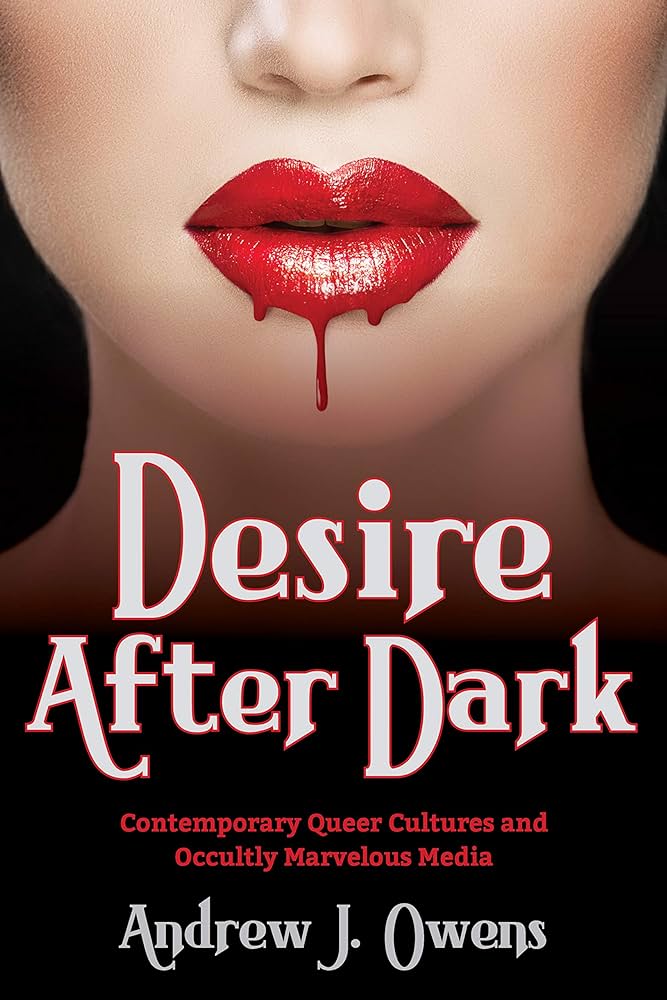
Desire After Dark: Contemporary Queer Cultures and Occultly Marvelous Media (2021)
Andrew Owens
Since the 1960s, the occult in film and television has responded to and reflected society's crises surrounding gender and sexuality.
In Desire After Dark, Andrew J. Owens explores media where figures such as vampires and witches make use of their supernatural knowledge in order to queer what otherwise appears to be a normative world. Beginning with the global sexual revolutions of the '60s and moving decade by decade through "Euro-sleaze" cinema and theatrical hardcore pornography, the HIV/AIDS crisis, the popularity of New Age religions and witchcraft, and finally the increasingly explicit sexualization of American cable television, Owens contends that occult media has risen to prominence during the past 60 years as a way of exposing and working through cultural crises about queerness. Through the use of historiography and textual analyses of media from Bewitched to The Hunger, Owens reveals that the various players in occult media have always been well aware that non-normative sexuality constitutes the heart of horror's enduring appeal.
By investigating vampirism, witchcraft, and other manifestations of the supernatural in media, Desire After Dark confirms how the queer has been integral to the evolution of the horror genre and its persistent popularity as both a subcultural and mainstream media form.
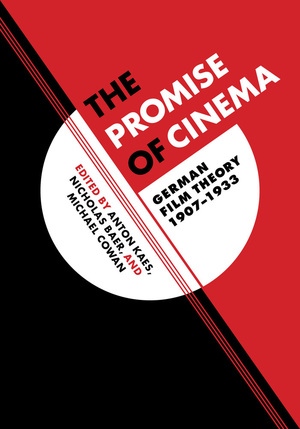
The Promise of Cinema: German Film Theory 1907-1933 (2016)
Ed. Anton Kaes, Nicholas Baer and Michael Cowan
Rich in implications for our present era of media change, The Promise of Cinema offers a compelling new vision of film theory. The volume conceives of “theory” not as a fixed body of canonical texts, but as a dynamic set of reflections on the very idea of cinema and the possibilities once associated with it. Unearthing more than 275 early-twentieth-century German texts, this ground-breaking documentation leads readers into a world that was striving to assimilate modernity’s most powerful new medium. We encounter lesser-known essays by Béla Balázs, Walter Benjamin, and Siegfried Kracauer alongside interventions from the realms of aesthetics, education, industry, politics, science, and technology. The book also features programmatic writings from the Weimar avant-garde and from directors such as Fritz Lang and F.W. Murnau. Nearly all documents appear in English for the first time; each is meticulously introduced and annotated. The most comprehensive collection of German writings on film published to date, The Promise of Cinema is an essential resource for students and scholars of film and media, critical theory, and European culture and history.
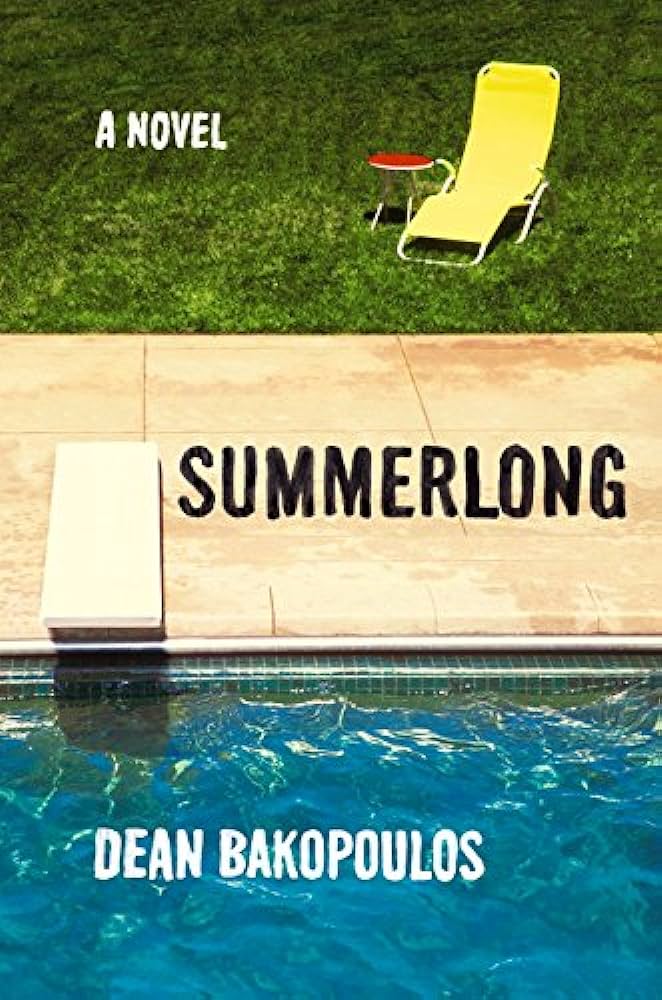
Summerlong: A Novel (2015)
Dean Bakopoulos
Award-winning writer Dean Bakopoulos delivers a brutally honest and incredibly funny novel about the strange and tenuous ties that bind us, and the strange and unlikely places we find connection. Full of mirth, melancholy, and redemption, Summerlong explores what happens when life goes awry.
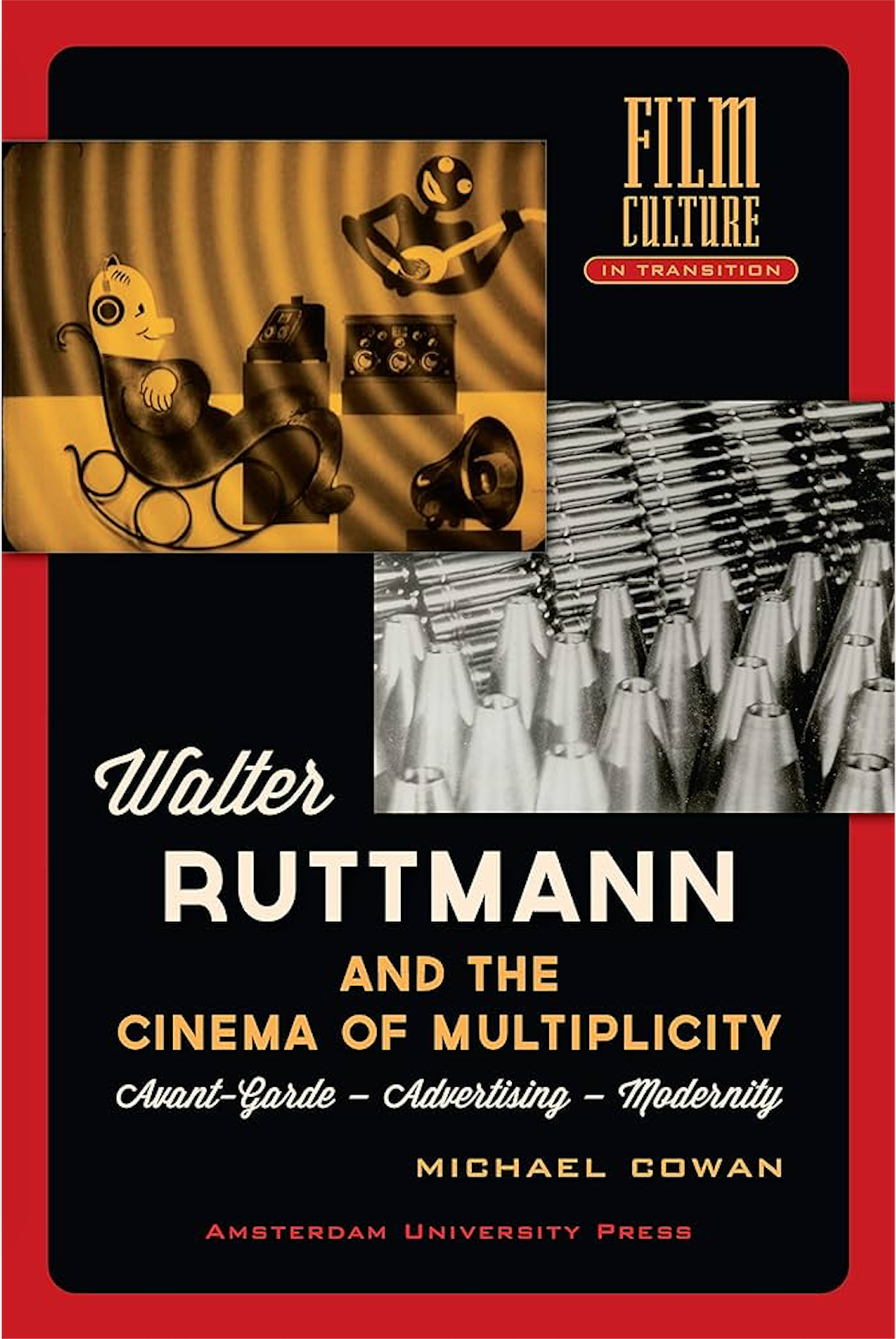
Walter Ruttmann and the Cinema of Multiplicity: Avant-Garde – Advertising – Modernity (2014)
Michael Cowan
A key figure in early avant-garde cinema, Walter Ruttmann was a pioneer of experimental animation and the creative force behind one of the silent era's most celebrated montage films, Berlin: Symphony of a Great City. Yet even as he was making experimental films, Ruttmann had a day job. He worked regularly in advertising -and he would go on to make industrial films, medical films, and even Nazi propaganda films. Michael Cowan offers here the first study of Ruttmann in English, not only shedding light on his commercial, industrial, and propaganda work, but also rethinking his significance in light of recent transformations in film studies. Cowan brilliantly teases out the linkages between the avant-garde and industrial society in the early twentieth century, showing how Ruttmann's films incorporated and enacted strategies for managing the multiplicities of mass society.
Winner of the Willy Haas Award (Germany); Honorable Mention for Best Book by the British Association of Film, Television and Screen Studies (BAFTSS); long-listed for the Kraszna-Krausz Award in the Moving Image.
Technology’s Pulse: Rhythm in German Modernism (2011/2018)
Michael Cowan
Modernity, as has often been observed, was fundamentally concerned with questions of temporality. The period around 1900, in particular, witnessed numerous efforts both to rationalize time and to liberate non-rational temporal experience. Within this broader framework, 'rhythm' came to form the object of an intense and widespread preoccupation. Rhythmical research played a central role not only in the reconceptualisation of human physiology and labour in the late nineteenth century, but also in the emergence of a new leisure culture in the early twentieth. The book traces the ways in which ideas about 'rhythm' were mobilised both to conceptualise modernity and to forge a new understanding of temporal media that came to mark the mass-mediated experience of the 1920s: a conception of artistic media as mediators between the organic and the rational, the time of the body and that of the machine.
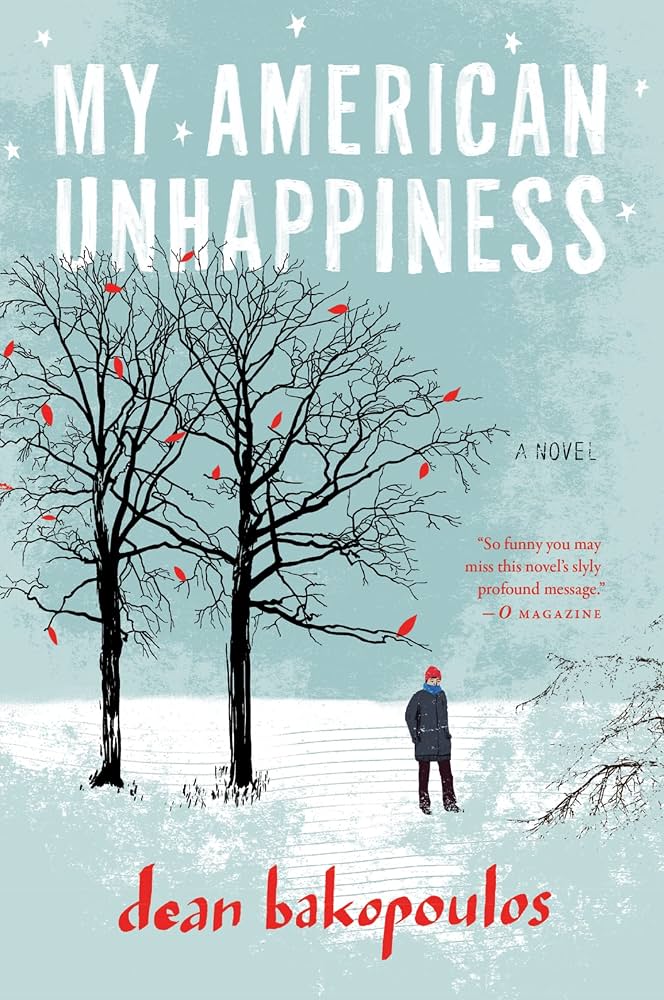
My American Unhappiness (2011)
Dean Bakopoulos
“Why are you so unhappy?” That’s the question that Zeke Pappas, a thirty-three-year-old scholar, asks almost everybody he meets as part of an obsessive project, “The Inventory of American Unhappiness.” The answers he receives—a mix of true sadness and absurd complaint—create a collage of woe. Zeke, meanwhile, remains delightfully oblivious to the increasingly harsh realities that threaten his daily routine, opting instead to focus his energy on finding the perfect mate so that he can gain custody of his orphaned nieces. Following steps outlined in a women’s magazine, the ever-optimistic Zeke identifies some “prospects”: a newly divorced neighbor, a coffeehouse barista, his administrative assistant, and Sofia Coppola (“Why not aim high?”).
A clairvoyant when it comes to the Starbucks orders of strangers, a quixotic renegade when it comes to the federal bureaucracy, and a devoted believer in the afternoon cocktail and the evening binge, Zeke has an irreverent voice that is a marvel of lacerating wit and heart-on-sleeve emotion, underscored by a creeping paranoia and made more urgent by the hope that if he can only find a wife, he might have a second chance at life.
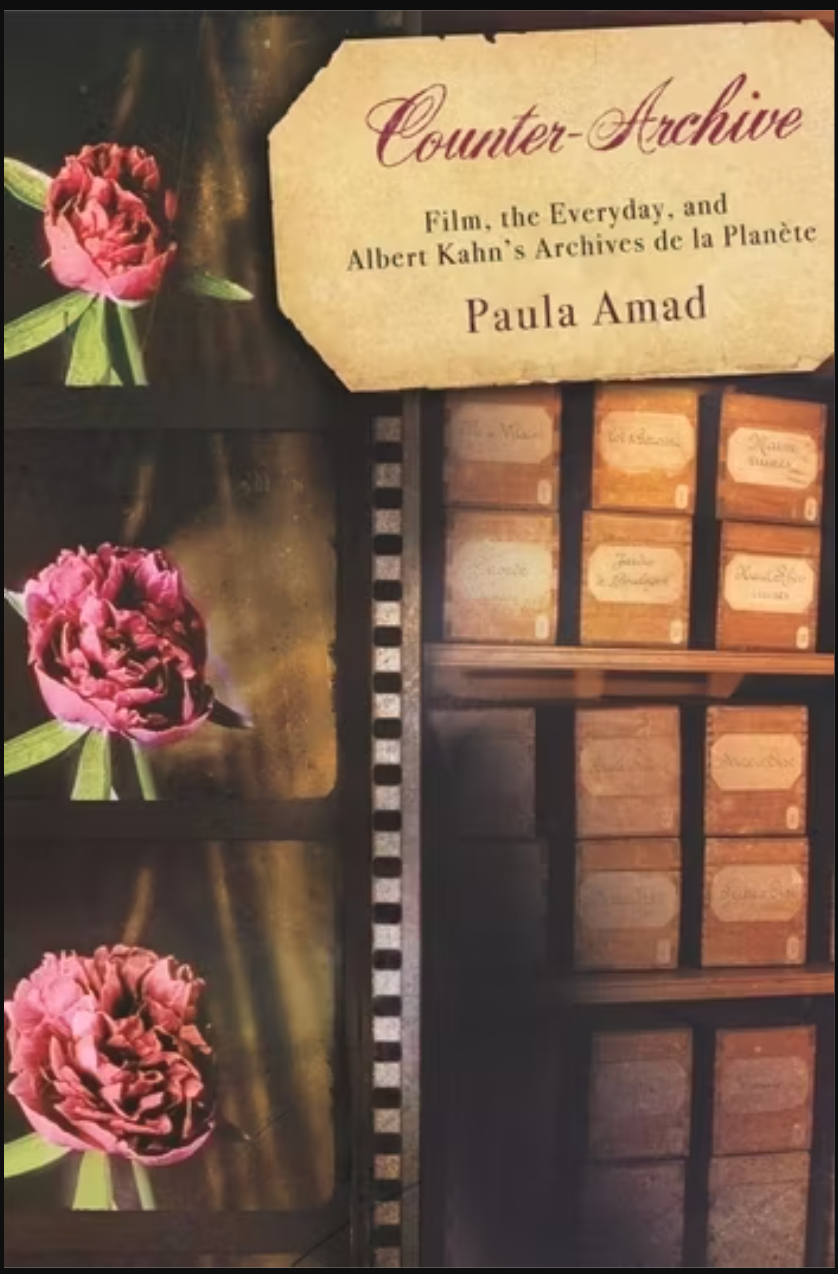
Counter-Archive: Film, the Everyday, and Albert Kahn's Archives de la Planète (2010)
Paula Amad
Tucked away in a garden on the edge of Paris is a multimedia archive like no other: Albert Kahn's Archives de la Planète (1908-1931). Kahn's vast photo-cinematographic experiment preserved world memory through the privileged lens of everyday life, and Counter-Archive situates this project in its biographic, intellectual, and cinematic contexts. Tracing the archive's key influences, such as the philosopher Henri Bergson, the geographer Jean Brunhes, and the biologist Jean Comandon, Paula Amad maps an alternative landscape of French cultural modernity in which vitalist philosophy cross-pollinated with early film theory, documentary film with the avant-garde, cinematic models of temporality with the early Annales school of history, and film's appropriation of the planet with human geography and colonial ideology. At the heart of the book is an insightful meditation upon the transformed concept of the archive in the age of cinema and an innovative argument about film's counter-archival challenge to history. The first comprehensive study of Kahn's films, Counter-Archive also offers a vital historical perspective on debates involving archives, media, and memory. (from amazon.com)
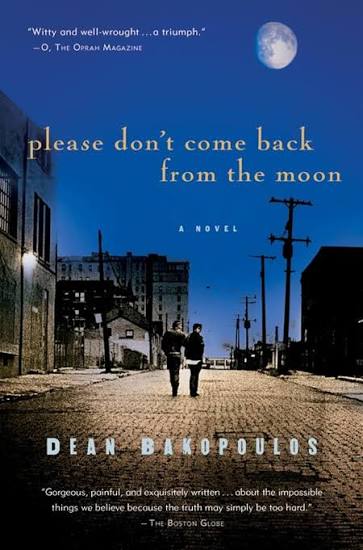
Please Don’t Come Back from the Moon (2006)
Dean Bakopoulos
The summer Michael Smolij turns sixteen, his father disappears. One by one other men also vanish from the blue-collar neighborhood outside Detroit where their fathers before them had lived, raised families, and, in a more promising era, worked. One man props open the door to his shoe store and leaves a note. "I'm going to the moon," it reads. "I took the cash."
The wives drink, brawl, and sleep around, gradually settling down to make new lives and shaking off the belief in an American dream that, like their husbands, has proven to be a thing of the past. Unable to leave the neighborhood their fathers abandoned, Michael and his friends stumble through their twenties until the restlessness of the fathers blooms in them, threatening to carry them away.
This is a haunting, unforgettable novel for anyone who has ever been left longing.