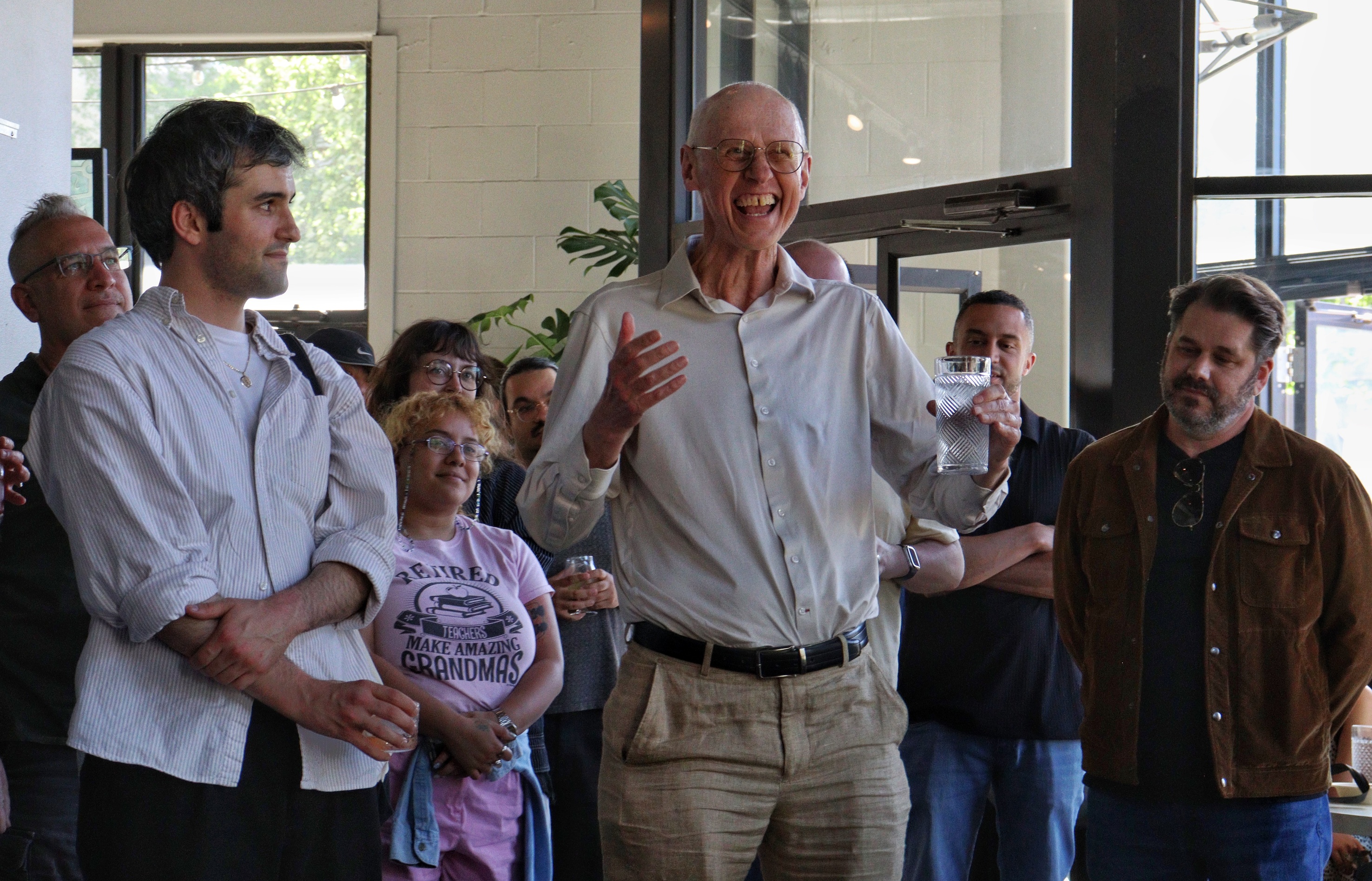
After nearly three decades of teaching, mentoring, and shaping Film Studies at the University of Iowa, Corey Creekmur has written a reflection on his career and the communities that supported it. His retrospective looks back on the courses, collaborations, and creative work that defined his time in Cinematic Arts.
Cinematic Arts Career Retrospective By Corey K Creekmur
After 29 years as a faculty member (following visiting appointments since 1995) at the University of Iowa appointed in Cinematic Arts (previously Cinema and Comparative Literature), English, and Gender, Women’s & Sexuality Studies, I’m retiring with gratitude for an institution, departments, and leaders that allowed me to explore and teach diverse topics across disciplines. I have lasting respect and affection for the many brilliant students I’ve taught and colleagues I’ve worked with.
Despite my multiple appointments, Film Studies has been by primary affiliation, and most of my professional service has been directed towards that field, which Iowa pioneered. I was honored to inherit and continue in that tradition, serving for many years as the Director of the Institute for Cinema and Culture, which promoted film culture on campus beyond the department’s curriculum.
Cinematic Arts allowed me to teach courses from introductory surveys to advanced graduate seminars, on topics ranging from Hollywood genres like film noir and the Western to the films of Alfred Hitchcock and Jean-Luc Godard; I offered graduate courses on the voice in cinema, on cinematic time, and feminist and queer theories of cinema, among others. I was also encouraged to develop my interest in popular Hindi cinema, and was able to team-teach memorable classes on that topic with Phillip Lutgendorf, a specialist in South Asian culture.
As every teacher knows, you learn as much as your students in the classroom, and they, along with my impressive colleagues, ensured that this Professor remained a lifelong student.
I’ve also had the privilege of directing or co-directing 16 doctoral dissertations in Film Studies, and serving on many more graduate committees for PhD, MA, MFA, and undergraduate Honors students in Cinematic Arts and other departments. It’s especially rewarding to mentor students discovering and developing their own professional, intellectual, and artistic identities, and then to follow their ongoing careers. I’ve also served on many search and promotion committees, facilitating the hiring and advancement of outstanding fellow scholars and teachers.
The rich film culture promoted by Cinematic Arts offered regular interaction and collaboration with filmmakers and screenwriters as well as film historians and theorists, and my own interest in experimental cinema was richly sustained by the creative work of colleagues, visiting artists, and film festivals and screenings that have stretched the boundaries of cinema for decades at Iowa.
The program has consistently extended “film study” beyond the classroom, and into the local community. One memorable example of such creative and critical activity was The Living Nickelodeon, created by Professor Rick Altman to recreate the sights and sounds of early filmgoing for modern audiences: my role providing sound effects for our troupe while others offered more attractive musical accompaniment allowed me to join the show on the road to entertain and educate enthusiastic audiences in the United States, Canada, and Europe.
My other scholarly and pedagogical interests – in crime fiction, comics and graphic novels, and the representation of sexuality and gender in popular culture – have also been generously supported by various offices and centers at the University including International Programs, the Center for the Book, The UI Library’s Special Collections, and The Obermann Center for Advanced Studies, as well as vital local entities including FilmScene, Prairie Lights Bookstore, and the Iowa City Public Library, among others.
Again, I can only offer humble but heartfelt thanks to every person and every office that has allowed and encouraged my career to devote itself to understanding the cultural and historical significance popular artifacts like movies, comic books, detective novels, and pop songs have played in our lives.
Editors Note: The Department of Cinematic Arts is immensely grateful for Corey’s dedication to film culture at Iowa and for the generations of students and colleagues he has influenced.